Morrow Mechanical is now Amazing Morrow!

We're Hiring! Apply Online To Join the Ammmazing Morrow Team!

Author: justin@morrowmechanical.com

Why Is My AC Blowing Hot Air?

You walk into your home on a scorching Spring day, expecting relief from the heat – only to be met with warm air blowing from your vents. If you’re wondering why your AC is blowing hot air, you’re not alone. This frustrating issue is common for homeowners, but identifying the cause can help you get back to comfort, faster.

At Amazing Morrow, we’ll walk you through the most common reasons your AC may be blowing warm air and what you can do to fix it.

How Your Air Conditioner Should Work

Your air conditioner cools your home by pulling warm indoor air over an evaporator coil filled with refrigerant. The refrigerant absorbs the heat, cooling the air before circulating it back into your home.

If your AC is blowing hot air, something has disrupted this process, and a faulty component or airflow issue is likely to blame.

7 Reasons Your AC Is Blowing Hot Air

If you’re asking, “Why is my AC blowing hot air instead of cool?”, one of these issues is likely the cause:

1. Incorrect Thermostat Settings

Before assuming there’s a major issue, check your thermostat. Ensure it’s set to “COOL” and the fan is on “AUTO”, not “ON.” If the fan is set to “ON,” it will run constantly – even when the AC isn’t cooling, pushing out warm air.

2. Dirty Air Filters Blocking Airflow

A clogged air filter restricts airflow, preventing warm air from reaching the evaporator coil. Without proper airflow, your AC can’t remove heat effectively, causing it to circulate warm air instead.

SOLUTION: Replace your air filter every 1-3 months to keep your system running efficiently.

3. Frozen Evaporator Coil

A frozen coil prevents heat absorption, leading to warm air blowing from your vents. Signs include ice buildup on refrigerant lines and reduced airflow.

How To Fix:

  • Turn off your AC and set the fan to “ON” to help melt the ice.
  • Replace dirty air filters to restore airflow.
  • Check for blocked air vents that could be restricting circulation.

4. Refrigerant Leaks

Your AC relies on refrigerant to cool the air. A low refrigerant level means the system can’t absorb heat properly, leading to warm air circulation.

SOLUTION: If your refrigerant is low, you likely have a leak that needs professional repair, as your AC is a closed system that shouldn’t lose refrigerant.

5.Dirty or Blocked Condenser

The outdoor condenser unit is responsible for releasing heat collected from inside your home. If it’s clogged with dirt, debris, or blocked by vegetation, the heat exchange process is disrupted, making cooling less effective.

How To Fix:

  • Clear at least two feet of space around your condenser.
  • Clean the unit by gently spraying it with a hose (avoid using high pressure).

6. Compressor Malfunction

The compressor pumps refrigerant through your AC system. If it fails, refrigerant won’t circulate properly, and your AC won’t cool the air.

Warning Signs:

  • Unusual noises (banging, clicking, or hissing).
  • Circuit breaker trips when the AC turns on.
  • AC runs but doesn’t cool your home.

A failed compressor requires professional repair or replacement.

7. Power Problems

If your indoor fan is running but your outdoor unit isn’t, there may be a power issue. A tripped circuit breaker or blown fuse could have shut off power to your outdoor unit while the indoor fan keeps circulating air.

SOLUTION: Check your electrical panel for a tripped breaker and reset it if necessary. If it trips again, call an HVAC technician for further diagnosis.

Get Expert AC Repairs in Spring, TX

If your AC is blowing hot air, some issues – like thermostat settings, clogged filters, or blocked vents – can be fixed easily. However, problems with refrigerant, the compressor, or electrical components require professional attention.

At Amazing Morrow, we provide fast, expert AC diagnostics and repairs throughout Spring, TX and surrounding areas. Our licensed technicians can quickly identify the problem and restore cool air to your home.

Call Amazing Morrow today at (281) 370-1566 to schedule your AC repair in Spring, TX!

Should I Replace My AC Evaporator Coil or The Whole AC System?

When you discover that a major component of an appliance or home system needs repair, it’s easy to wonder whether you should fix that component or invest in an entirely new system. If you discover that you need a new AC evaporator coil, you may be wondering the same thing. Let’s explore the details of this challenge including when it makes sense to replace the coil and when it makes sense to replace your whole system.

What is an Evaporator Coil and Why is It Broken?

An evaporator coil is a critical component of your air conditioning system. It is part of the inside component of your AC system, which absorbs heat and humidity from your home before sending the refrigerant to the condenser and compressor outside.

Over time, the refrigerant that travels through the evaporator coil can erode the inside lining and cause coolant leaks. These leaks are both costly for the homeowner and bad for the environment. When this occurs, you are faced with the decision on whether to replace the coil or the AC system.

When to Replace the Coil

Evaporator coils are generally designed to last the life of your air conditioning system. Although some people may try to patch or repair an evaporator coil, this is a bad idea. Coolant leaks will still continue, increasing both your energy bills and damage to the environment.

The only time it makes sense to replace just the evaporator coil is if your air conditioning system is still under warranty and relatively new. A trained, certified professional can then ensure that the evaporator coil still matches your overall system

When to Replace Your AC System

If your air conditioning system is near the end of its 10- to 12-year lifespan, it may make more sense to replace your whole AC system.

First, you don’t want to mismatch your inside and outside unit because you may create energy inefficiencies, reduce your comfort, and overwork the newer components of your system. Both portions of your air conditioning system should match in SEER rating, refrigerant and age.

A mismatched system causes multiple problems because the components need to work together to gain the most efficiency. For example, if you put a new evaporator coil in an old AC system, you’ll lose the efficiency gains on the inside unit because your outside unit won’t be able to keep up. In addition, the inefficiency of the older unit will make the new equipment work harder than necessary, shortening its overall lifespan.

Older systems traditionally used R-22 refrigerant, which is no longer being produced because it’s harmful to the environment. As a result, purchasing this coolant for recharges will be increasingly difficult and expensive. By investing in a new system, you’ll be switching to one that uses the modern, safer R-410A refrigerant.

5 Questions To Ask Before Hiring an HVAC Contractor

Choosing the right HVAC contractor directly impacts your home’s comfort, energy costs, and long-term system lifespan. The wrong choice can lead to costly repairs, inefficient performance, or even safety risks. Whether you need a heater repair in Spring, TX, or a full system installation, knowing what to ask will help you find a skilled, trustworthy professional.

At Amazing Morrow, we understand how important it is to hire an experienced HVAC expert. This guide covers five essential questions to ask before making your decision.

1. Are You Licensed and Insured in Texas?

HVAC work requires technical expertise and compliance with state regulations. In Texas, HVAC contractors must be licensed through the Texas Department of Licensing and Regulation (TDLR) to ensure they meet safety and performance standards.

It’s also crucial to ask about insurance coverage. A reputable contractor should carry liability insurance and workers’ compensation, protecting you from unexpected costs due to accidents or property damage during the job. Without proper coverage, you could be held financially responsible for any mishaps on your property.

2. What Industry Certifications Do You Hold?

Beyond licensing, the best HVAC contractors earn industry certifications that demonstrate advanced training and adherence to best practices.

Certifications to look for include:

  • NATE (North American Technician Excellence) – Verifies a technician’s expertise in HVAC installation and service.
  • EPA 608 Certification – Required for handling refrigerants safely and legally.
  • ACCA (Air Conditioning Contractors of America) Membership – Shows commitment to industry standards and ongoing education.

These credentials ensure that the contractor has the knowledge and skills needed to diagnose, repair, and install HVAC systems efficiently.

3. Do You Offer a Warranty or Guarantee?

A confident HVAC contractor will stand behind their work. Before hiring, ask what warranties or guarantees they provide on labor, parts, and system installations.

Reliable HVAC companies typically offer:

  • Manufacturer warranties on equipment, covering defects or early failures.
  • Labor warranties that ensure installation and repairs are done right.
  • Satisfaction guarantees that protect you from poor workmanship.

Understanding these warranties gives you peace of mind and prevents unexpected out-of-pocket expenses if something goes wrong.

4. How Transparent Is Your Pricing?

HVAC services can be a significant investment, so clear and upfront pricing is a must. A professional contractor should provide a detailed written estimate before starting any work.

Make sure the estimate includes:

  • Equipment and material costs
  • Labor fees
  • Additional charges (such as permits or disposal fees)

Be wary of contractors who give vague pricing or refuse to provide estimates in writing. Transparent pricing helps you avoid hidden fees and ensures you’re getting a fair deal.

5. What Experience Do You Have With HVAC Systems in Spring, TX?

Local expertise matters when choosing an HVAC contractor. In Texas, where summers are hot and humid, your HVAC system must be equipped to handle high cooling demands efficiently.

A contractor with local expertise will understand:

  • The best energy-efficient solution for Texas homes.
  • Common HVAC issues in Spring, such as humidity control and system overload.
  • The latest technology and rebates available to help reduce energy costs.

It’s also helpful to check customer reviews to see what past clients say about their experience. Positive testimonials from local homeowners can give you confidence in the contractor’s reliability and expertise.

Trust Amazing Morrow for Your HVAC Needs

Hiring the right HVAC contractor requires careful consideration. By asking these five questions, you can ensure you’re working with a licensed, experienced, and transparent professional who prioritizes quality service.

At Amazing Morrow, we are fully licensed, certified, and have extensive experience handling Texas’ unique climate challenges. Whether you need an AC installation, eating repair, or routine maintenance, we’re here to help.

Call us today at (281) 301-0368 for expert HVAC services in Spring, TX! 

What Happens If You Don’t Change Your Air Filter in the Winter?

During the cold winter months, your heating system works overtime to keep your home comfortable. But if you’re not keeping up with essential tasks – like replacing your air filter – you could be putting your HVAC system at risk. Many homeowners underestimate the importance of regular filter changes, leading to higher bills, reduced air quality, and even system breakdowns.

At Amazing Morrow, we’re here to explain why changing your air filter is so important, what happens when you neglect this task, and how to keep your system running smoothly this winter in Spring, TX.

Why Does Air Filter Replacement Matter?

Your air filter is the first line of defense for both your HVAC system and your home’s air quality. It traps dust, dirt, allergens, and debris, preventing these particles from circulating in your home or damaging your HVAC components.

When the filter becomes clogged, it restricts airflow, forcing your system to work harder. This extra strain leads to:

  • Higher energy bills,
  • Increased wear and tear, and
  • Poor indoor air quality

Neglecting this simple maintenance task can quickly turn into costly repairs or replacements.

What Happens When Your Filter Is Dirty?

If you don’t replace your air filter during the winter, the consequences can pile up quickly. A clogged filter disrupts your system’s ability to maintain consistent airflow, leading to:

  • Uneven heating: Some rooms may feel too warm while others remain cold due to restricted airflow.
  • Longer heating cycles: Your furnace has to run longer to compensate, wasting energy.
  • Overheating and breakdowns: Reduced airflow can cause the system to overheat, triggering emergency shutdowns or component failure. Increased wear and tear on system components
  • Higher energy bills: The harder your system works, the more it costs to run.
  • Dusty surfaces and vents: A clogged filter allows dust and debris to settle throughout your home.

How Often Should You Change Your Filter in the Winter?

Even though Texas winters are mild compared to other parts of the country, your HVAC system still sees heavy use. Checking and replacing your air filter regularly is key to keeping your system in good shape.

For most homes, filters should be replaced every 60-90 days, but there are exceptions:

  • Homes with pets: Replace filters every 30-60 days due to pet hair and dander.
  • High-dust environments: If you live in an area with higher dust levels, check filters monthly.

Make it a habit to inspect your filter at least once a month during peak heating seasons.

How To Replace Your Air Filter

Changing your air filter is a simple process, and doing it regularly can save you from costly repairs later. Follow these steps:

  1. Locate the filter, which is typically found near your HVAC system’s indoor unit.
  2. Always power down your system for safety before replacing the filter.
  3. Note the dimensions printed on the filter frame and purchase the correct size.
  4. Insert the replacement with the airflow arrow pointing in the correct direction.
  5. Power your system back on, and enjoy improved airflow and air quality.

Choosing the Right Filter for Your Home

Not all filters are the same, and choosing the right type can make a big difference. Here are some common options:

  • Fiberglass filters: An affordable option that provides basic dust protection.
  • Pleated filters: Better for trapping small particles like pollen and pet dander.
  • HEPA filters: Ideal for those with allergies or respiratory concerns, as they capture the smallest particles.
  • Washable filters: Reusable and eco-friendly but require regular cleaning.
  • Electrostatic filters: Use a static charge to attract and trap particles, offering advanced filtration.

Your choice will depend on your home’s needs, your HVAC system, and your budget.

Why Neglecting Filter Changes Is Costly

Ignoring your air filter can have serious consequences for your heating system and your wallet. Restricted airflow forces critical components to work harder, increasing the risk of failure. Emergency repairs or premature system replacements are far more expensive than regular filter changes.

Trust Amazing Morrow for Winter HVAC Care

Now you know the risks of skipping air filter changes in the winter. At Amazing Morrow, we’re dedicated to keeping homes in Spring, TX comfortable and worry-free. From filter replacements to comprehensive HVAC maintenance, our team has you covered.

Call us today at (281) 301-0368 to schedule professional air filter maintenance or learn more about our services. Keep your heating system running smoothly this winter with Amazing Morrow!

Why Is My Home So Dusty?


Dust is one of those unavoidable things in modern homes. Depending on the number of people and pets living in your home, how often everyone is inside, and how frequently you choose to clean, the level of dust may vary significantly from house to house.  However, if you notice that your home is suddenly much more dusty than in the past, you may have an indoor air quality issue or a heating, ventilating, and air conditioning (HVAC) problem.

Definition and Consequences of Dust

Dust can include a myriad of different particles generated from dirt and other debris that comes with simply living. People and pets are constantly shedding skin particles. Papers, clothing, and everything else in your home is slowing breaking down and creating airborne particles. Pollen, mold spores, and other outdoor particulates can be added to the mix.

In some cases, dust can simply be a nuisance.  However, today, millions of people suffer from allergies, asthma, and other respiratory diseases that can be worsened by dust. If you have family members in this situation, it is even more critical that you find ways to reduce dust in your home.

Ductwork Problems

One cause of accumulating dust in a home can be poorly sealed ductwork. If your ducts are not tight, your HVAC system will be pulling in dust and debris that is floating around your living area into the overall ventilating system. Because this air is being pulled in from outside your venting system, it will bypass your air filter and simply be blown around your home.

Air Filter Problems

Another factor that can increase dust in your home is a clogged air filter. Air filters are designed to trap dust and other particles before they are pulled into your HVAC system. This not only helps improve your air quality, but also protects the sensitive components of your heating and cooling equipment. Be sure to change your air filters according to your manufacturer’s recommendation.

In addition, consider investing in HEPA filters if you have family members with respiratory issues. These filters are capable of trapping very tiny particles, which can keep dust levels lower. Check the minimum efficiency report value (MERV) rating of your filters; the higher the rating, the better the air filtration.

Maintain HVAC Regularly

By investing in regular maintenance service calls, you can ensure that your HVAC equipment is operating efficiently and reliably. Cleaning, inspecting and tuning up your equipment twice a year can also minimize dust accumulation.

General Housekeeping and Air Cleaners

Finally, be sure to regularly dust and vacuum your home. You may want to use a HEPA vacuum bag to capture dust more effectively. In addition, be sure to wash your bedding, fabric window coverings and other household items regularly in hot water to kill dust mites. Families that struggle with respiratory illness may want to go one step further and purchase air cleaners that can further tackle dust and other airborne particles.

If you’re facing air quality issues and too much dust, call the professional team at Morrow Mechanical for assistance. Our team can come up and inspect your ductwork, filtration system and HVAC equipment to help improve your indoor air quality.

Should I Replace My AC Evaporator Coil or The Whole AC System?

When you discover that a major component of an appliance or home system needs repair, it’s easy to wonder whether you should fix that component or invest in an entirely new system. If you discover that you need a new AC evaporator coil, you may be wondering the same thing. Let’s explore the details of this challenge including when it makes sense to replace the coil and when it makes sense to replace your whole system.

What is an Evaporator Coil and Why is It Broken?

An evaporator coil is a critical component of your air conditioning system. It is part of the inside component of your AC system, which absorbs heat and humidity from your home before sending the refrigerant to the condenser and compressor outside.

Over time, the refrigerant that travels through the evaporator coil can erode the inside lining and cause coolant leaks. These leaks are both costly for the homeowner and bad for the environment. When this occurs, you are faced with the decision on whether to replace the coil or the AC system.

When to Replace the Coil

Evaporator coils are generally designed to last the life of your air conditioning system. Although some people may try to patch or repair an evaporator coil, this is a bad idea. Coolant leaks will still continue, increasing both your energy bills and damage to the environment.

The only time it makes sense to replace just the evaporator coil is if your air conditioning system is still under warranty and relatively new. A trained, certified professional can then ensure that the evaporator coil still matches your overall system

When to Replace Your AC System

If your air conditioning system is near the end of its 10- to 12-year lifespan, it may make more sense to replace your whole AC system.

First, you don’t want to mismatch your inside and outside unit because you may create energy inefficiencies, reduce your comfort, and overwork the newer components of your system. Both portions of your air conditioning system should match in SEER rating, refrigerant and age.

A mismatched system causes multiple problems because the components need to work together to gain the most efficiency. For example, if you put a new evaporator coil in an old AC system, you’ll lose the efficiency gains on the inside unit because your outside unit won’t be able to keep up. In addition, the inefficiency of the older unit will make the new equipment work harder than necessary, shortening its overall lifespan.

Older systems traditionally used R-22 refrigerant, which is no longer being produced because it’s harmful to the environment. As a result, purchasing this coolant for recharges will be increasingly difficult and expensive. By investing in a new system, you’ll be switching to one that uses the modern, safer R-410A refrigerant.

Is It Best to Replace Both Furnace and Air Conditioner Simultaneously?

The real answer to this popular question is an uncertain one: the dreaded answer of “it depends.” Unfortunately, it’s one of those questions that require much more information to answer correctly. Every home has a unique heating, ventilating, and air conditioning (HVAC) situation. In some of those situations, it does make sense to replace both the air conditioner and furnace at the same time. In others, it does not. Let’s take a close look at a few of these key factors and the role they play in making the right decision for your particular home.

Equipment Age

Perhaps the number one factor in deciding whether or not you should replace your air conditioner and furnace at the same time is the age of both pieces of equipment. The average lifespan for an air conditioner is around 10 to 15 years. However, the average lifespan of a furnace is 15 to 20 years, potentially twice as long as the air conditioner.

If you installed a new air conditioner and furnace at the same time, it’s likely that you will need to replace your air conditioner before your furnace. In fact, it’s probable that your furnace could last as long as two new air conditioning units.

A good rule of thumb is that if your furnace is less than 10 years old when you require a new air conditioner, do not replace them at the same time, unless you are upgrading to a multistage or variable speed air conditioning system.

Cost Effectiveness

If, on the other hand, your furnace was installed before your air conditioner, and one of them breaks, it may make sense to replace both your air conditioner and furnace at the same time. If both pieces of equipment are more than a decade old, it’s worth considering replacing your entire HVAC system.

The average cost of replacing a furnace alone can be as much as $4,300. An air conditioner replacement alone can be as much as $7,000. The combined cost to replace both at the same time will be less than replacing both components separately. For instance, adding a new furnace to an air conditioning replacement may run only an extra $1,000 to $2,500.

Efficiency Gains

The other factor to consider in this equation is if you decide to invest in a high-efficiency air conditioner such as a multistage or variable speed system. These more efficient systems usually have a SEER rating of 16 or higher. These systems require a matching furnace that has a variable speed blower in order to minimize energy consumption.

Our team at Morrow Mechanical wants to help you understand your unique HVAC situation. Give us a call and we’d be happy to come out, evaluate your equipment, and offer suggestions. You can trust our professionals to give you an honest assessment with pros and cons so you can make the best decision for you and your family.

Do I Really Need An AC Tune-Up?

It’s easy to understand why most people skip scheduling an AC tune-up in the spring. When the weather is pleasant, you don’t really worry about whether your air conditioner is working or not. And when it gets hot enough to finally turn it on, you’re just happy that it’s working well enough to cool down your home. As a result, most homeowners don’t reach out to an AC professional until their air conditioning is not working at all.

However, an AC tune-up is actually a very important preventive maintenance task that can provide you with many benefits you might not have considered before. Here’s a short list so you can make a well-informed decision.

Reduce Your Energy Bills

A well-functioning air conditioner will use energy more efficiently. By scheduling an annual AC tune-up, you’ll have the benefit of a pair of expert eyes who can inspect every component of your air conditioning system. One of our certified technicians will perform a thorough cleaning and inspection as well as lubricate, tighten and adjust dozens of components to make sure they are ready to take on a hot summer. Your AC unit can then provide maximum cooling with minimal energy usage, saving you money on your monthly utility bills.

Extend the Life of Your Air Conditioner

Just like any other appliance or piece of equipment, a well-maintained air conditioner will last longer. Most AC units have an average lifespan of 10 to 15 years; however, if you invest in tune-ups each year, you may extend that lifespan even longer. That means you’ll be able to defer the cost of purchasing and installing a major appliance into the future, freeing up funds for other financial priorities.

Improve Air Quality

Air conditioners not only remove heat from your indoor space but also help manage humidity levels and air quality. By ensuring that filters are changed regularly and your whole AC system is tuned-up annually, you can improve the indoor air quality of your home. If you have family members who suffer from allergies or other respiratory illnesses, this can increase their quality of life significantly.

Minimize Problems and Stress

Let’s face it. Most people lead busy lives in our modern world, and anything you can do to make daily things run more smoothly or reduce potential problems help reduce stress. When an air conditioner breaks during the heat of the summer, especially in Houston, TX, it can be an uncomfortable or even life-threatening situation. By investing in a simple AC tune-up, you’ll reduce the chances of a malfunction and take one more potentially stressful situation out of your life.

The professionals at Morrow Mechanical want to keep you and your family safe and comfortable this summer. Call us today for information about our AC tune-ups and maintenance offerings. Compared with the cost of a new air conditioner or an emergency repair call, an AC tune-up is a small investment for the benefits and peace of mind you’ll receive in return.

Is it Time to Repair or Replace Your Air Conditioning System?

The decision to replace an old air conditioning system can be a tough one for most homeowners. A new system can be a large investment, and the question becomes one of “Can I get a few more years by repairing it, or should I simply invest in a new one and not waste money on repair work?”. Although a new air conditioning system can be a big investment, so can the costs of continuing to repair and operate an old, inefficient system. Here are a few things to consider and evaluate.

What is the age of your unit?

You can expect a well-maintained air conditioner to last 10 to 12 years. However, if you’re in need of expensive repairs and your air conditioner is more than 8 years old, it will often make more financial sense to replace it.

A major component has failed and the warranty has expired!

Repair costs will be expensive if a major piece of the equipment has failed and is no longer covered by any kind of warranty. Serious consideration should be given to replacement if repair costs are in excess of a third of the price of a new system. New equipment will come with a 10 year manufacturer parts warrant in most cases.

Air conditioner uses R22 refrigerant

R22 refrigerant is being phased out by the EPA in order to comply with various governmental agency clean air laws. If your air conditioner uses R22 refrigerant, you’ll eventually need to replace the system in order to change to the newer R410a refrigerant. Consideration should be given to replacement if you’re having a major component failure with a system that uses R22 refrigerant.

Your home isn’t comfortable

You’re having a hard time keeping your home comfortable. This could be the sign of an aging air conditioner or even an incorrectly sized system. Regardless of the cause, you want your air conditioner to do its job! If it’s not going to keep your home cool, you’ll want to replace it with a unit that will.

Noticing higher utility bills?

Increased utility bills could be a sign that your air conditioner has to work harder to cool your home. Over time, an air conditioner becomes less efficient. So, even if your air conditioner is old and fully functioning, your cooling costs may be excessive. Some of the more efficient models can save you up to 30% on cooling costs.

Our company has successfully installed thousands of replacement air conditioning systems in the Houston area. We offer a professional evaluation and estimate on replacement systems at no charge. If you would like to know more contact us today and we’ll schedule a convenient time and show you all of the options you have.

Whole-Home Air Purifiers vs. Room Air Purifiers

Air purifiers are an excellent way to increase the quality of your home’s air and minimize asthma and allergy symptoms.

There are two main types of air purifiers on the market: room and whole-home air purifiers. It can be difficult to tell what type of air purifier to purchase. That’s why the indoor air quality experts at Morrow Mechanical have put together a helpful “whole-home air purifiers vs. room air purifiers” guide. Looking for a way to increase the quality of your home’s air?  You need to read this blog!

Whole-Home Air Purifiers: What Are They?

Whole-home air purifiers are well named because they purify all of your home’s air-conditioned air. There are several different varieties of whole-home air purifiers, falling under a couple of categories:

  1. Filter-based – Filter-based whole-home air purifiers are advanced HVAC filters. High-Efficiency Particulate Air (HEPA) filters are marketed as whole-home purification solutions. Used in place of less powerful filters they can improve the quality of your air-conditioned air.
  2. Duct-based – Duct-based whole-home air purification entails removing of a section of your home’s ductwork and adding high-efficiency filters.

Pros

  • Good for Large Homes

In a large home, you will have to purchase and operate several portable air purifiers in order to clean your air. However, whole-home air purification systems enable you to remove pollutants from every room in your home.

  • No Noise

Whole-home air purifiers don’t make any noise as they are simply a modification to your HVAC system.

  • ‘Invisible’

When a purification system is hidden in the ducts or AC unit, there is no concern about it being an eyesore.

Cons

  • HVAC System Must Run

If you aren’t running your HVAC system, your air won’t be cleaned. That means pollutants from your furniture, the outside, wall paint, and other sources won’t be removed from your home.

  • Requires Installation by HVAC Technician

Whole-home air purification systems must be installed by an HVAC technician, which could be an expensive and time-consuming undertaking.

  • Replacement

Whole-home air purification systems are filter-based, which means they’ll need frequent attention. The filters should be replaced every one-to-three months.

Room Air Purifiers: What Are They?

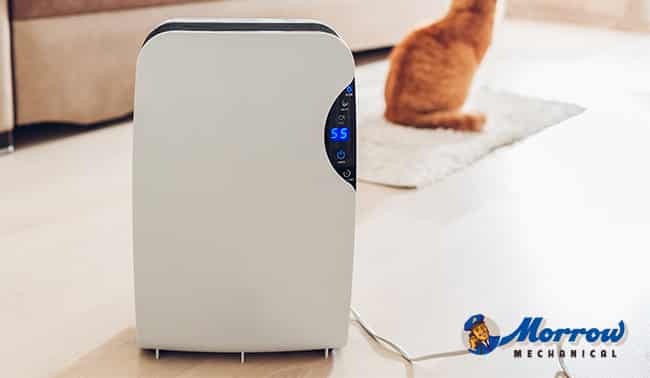
A room air purifier is a small, portable filtration device that can be placed on a table or in a corner. Unlike whole-home air purifiers, portable air purifiers don’t rely on the HVAC system to work. Once a purifier is plugged into an outlet, it will begin removing pollutants from the air.

Pros

  • Cheaper

Room air purifiers are much cheaper than whole-home systems.

  • Targeted Purification

If someone in your family suffers from acute allergy or asthma symptoms, a portable air purifier is an excellent way to help them feel better. For example, you can move the purifier into the individual’s room, or wherever they spend most of their time.

  • Operates Independent of HVAC System

Room purification systems will remove toxins and particulates all day and all night if you need them to, independent of your air conditioning. This means you can clean your home’s air without worrying about running up your cooling bill.

Cons

  • Can Only Clean the Air in One Room

Interested in cleaning the air in every room of your home? A portable purifier may not be the way to go. Unless you can purchase multiple systems, or frequently move the unit around your home, you should consider whole home purification.

  • Requires Maintenance

Portable air purifiers remove all pollutants in your home’s air, not just the ones that are found in HVAC ducts. Because of this, they collect a larger volume of particulates and require cleaning and maintenance frequently.

Whole-Home Air Purifiers vs. Room Air Purifiers, having trouble deciding? Call Morrow Mechanical!

Still can’t decide what type of air purifier is right for your home? Call Morrow Mechanical and talk to an air quality expert! Our team of NATE-certified HVAC experts serves the greater Houston area with pride. Call us today at 281-370-1566 or schedule your service online.

Schedule Service

"*" indicates required fields

This field is for validation purposes and should be left unchanged.