Morrow Mechanical is now Amazing Morrow!

We're Hiring! Apply Online To Join the Ammmazing Morrow Team!

Author: justin@morrowmechanical.com

How to Save Power While on Vacation


It’s summertime in Texas, and all of us are taking off for beach getaways, mountain retreats, waterparks, amusement parks, and family reunions. However, it is also the most expensive time to cool your home.

The HVAC experts at Morrow Mechanical are here to help you take advantage of your vacation time and save power while you’re taking some time off.

1. Turn Your Air Conditioner Off

It’s pointless to cool your home when you’re not there. If you don’t have a programmable thermostat, simply turning your air conditioner off at the thermostat will help you save electricity.

2. Unplug

Unplugging as many electronics as possible is one of the best ways to save power while you’re away. Even though you don’t have cell phones charging or a TV turned on, electronics can still use power. These electronics, often called ‘energy vampires’ will suck power even though they’re not being used. Unplugging vampire electronics could save you a shocking amount on your utility bill.

3. Reduce Your Water Heater’s Temperature

Obviously, you don’t need hot water when you’re not home. Newer model water heaters have a ‘vacation mode.’ This setting reduces the temperature of your water heater to 50 degrees.

If your water heater doesn’t have a vacation mode, you don’t have to miss out on the savings. You can turn the water heater’s temperature down as much as possible. Or, you can simply turn off power to the water heater at the breaker.

4. Use Timers

It’s nerve-wracking to leave your home unattended. To deter thieves, many homeowners choose to leave some lights on to give the appearance that they’re still home. However, this is not only an ineffective way to keep your home safe, it is also a huge energy consumer. Investing in a timer is a great way to increase the security of your home and slash your utility bill.

5. Draw the Shades

If you’ve turned off your air conditioning, but don’t want to return to a sweltering house, draw the curtains and close the shutters. Not only will this keep your home at a decent temperature, it will also keep prying eyes out.

6. Program Your Thermostat

If you have a programmable thermostat, be sure to take advantage of its features on your next vacation. You can set your thermostat higher when you are away to reduce your cooling expenses, then set it to cool on the day you return.

7. Don’t Empty Your Refrigerator

Many homeowners don’t know of the “four week rule” when it comes to refrigerators. Though you might be tempted to empty your refrigerator before a trip, if you’re going to be away less than four weeks, keep it fully stocked. Why? Because when your refrigerator is stocked with cold items, those cold foods and drinks help keep each other cold. It takes more energy to constantly cool the air in an empty fridge than it does to maintain the temperature of already-cold items.

However, if you are away for more than four weeks your best bet is to completely empty your fridge and unplug it.

Want to know more about how to save power when you’re on vacation? Call Morrow Mechanical!

We hope these tips help you save money and energy during your summer vacation. If you need more suggestions, or require HVAC service, call Morrow Mechanical. Our HVAC experts serve the Houston and Spring, Texas areas with top-notch professionalism and HVAC products. Call us today at 281-370-1566 or schedule your service online.

How to Maintain Your Home Appliances


Imagine you just invested in a company. You pour a large amount of money into the businesses’ future, then you monitor its performance and progress, right? Your home appliances are no different.

But, after completing step one: investing in home appliances, many homeowners forget step two: monitoring and maintenance. This mistake shortens the lifespan of your appliances and will lead to expensive repairs.

The expert technicians of Morrow Mechanical have assembled this guide to maintaining your investments. Read on to find out more.

1. Clean your dryer’s filter

If you find yourself having to dry your clothes twice, and yet you are regularly removing lint from the filter, it’s time for a new tactic. Dryer sheets develop a film on your dryer’s filter, clogging it. Remove your filter and clean it with hot water and a bit of laundry detergent. This will dissolve the film and help your dryer, well, dry!

2. Check the oven seal

Overtime, using your oven causes wear and tear on its seals. When the seals are worn out, heat escapes from the oven, into the home. Not only does this lead to uneven cooking, but it also forces your HVAC unit to work harder due to increased warm air circulating in your home. Replacing the seal will prevent heat from escaping your oven.

3. Clean refrigerator coils

If your refrigerator is being sluggish, it’s probably not just the humid Houston summer. Dirty refrigerator coils make it hard for your refrigerator to cool efficiently. Remove the grille at the bottom of the fridge and use a coil cleaning brush to eliminate debris and be sure your fridge is cooling properly.

4. Avoid overloads

A good rule of thumb is to never overload your appliances. You may temporarily save money on your utility bill by cramming clothes into the dryer, but consistent overloading will shorten its life. Avoid expensive repairs and premature replacements by not overloading your washer, dryer, or dishwasher.

5. Recalibrate your oven

If your oven hasn’t been heating as quickly, as accurately, or as evenly as it used to, try recalibrating its temperature. In your oven’s manual you’ll find instructions for how to calibrate the temperature display to the actual temperature inside the oven.

6. Clean the kitchen ventilation

Range hoods perform the important job of maintaining good indoor air quality by filtering heat and odors out of the home. However, dust and debris can clog the metal filters, reducing the range hood’s efficiency. You can maximize the filters’ capacity by cleaning them with hot soapy water.

7. Clean fridge gaskets

Sticky fingers and occasional spills lead to buildup on your fridge’s gaskets. If this buildup isn’t cleaned, your family will pull harder and harder to open the fridge door, leading to a tear in the gasket. So, to avoid an expensive repair and make your gaskets last as long as your refrigerator, clean them regularly.

Need more information on how to maintain your home appliances? Call us today!

Most homeowners aren’t expert technicians, so if you need help understanding how to maintain your home appliances, call the experienced professionals at Morrow Mechanical. Our team has generations of experience in installation, maintenance, and repair of HVAC systems. Call us at 281-370-1566, or schedule your service online.

Essential Steps to Detect Air Leaks in Your Home Ahead of Summer Heat


It’s summer in Texas, and your house is leaking cold air. That’s not the plot of this summer’s blockbuster horror film, it’s reality for many homeowners in the Spring and Greater Houston area. But no need to fear, the Morrow Mechanical team is here to help.

The experienced AC technicians on our team have put together instructions so you can check your own home for leaks and avoid horrifying utility bills this summer season.

Pre-Summer Prep: Finding Air Leaks

Pressurization Test

The best way to check your home for leaks is a pressurization test.  The process may seem complicated at first glance, but by following these steps, any homeowner can check their house for leaks. This pressurization test is best completed on a cool, windy day.

  1. First, identify common sites for leaks.
  •  The spaces underneath doors are the most obvious places to look for leaks, keep this in mind during the pressurization test.
  • Kneewalls, the short walls that support the rafters of timber roofs, often let air escape.
  • In older homes, the space around doors and windows may have increased due to shifting over time, leading to air leaks.
  • Wiring holes are rarely perfectly fitted to ceilings and walls. They are often guilty of allowing air to leak out.
  • A lesser-recognized site for leaks, simply because they are hidden from view, are attic hatches.
  • The plastic trim around recessed lights is often not completely flush with the ceiling, causing leaks.
  1. Second, turn off all combustion appliances like furnaces and water heaters.
  2. Shut all doors, windows, and fireplace flues. This step is crucial in identifying leaks, so be thorough.
  3. Turn on any fan that blows air to the outside, like fans above the stove, or bathroom fans. Alternatively, use a large window fan to suck air out of your rooms.
  4. Finally, light a stick of incense and carry it to any area you think a leak might be occurring. If the smoke from the incense is sucked into a gap, that indicates a leak exists.

Flashlight Method

If you do not feel comfortable or able to conduct a pressurization test, you can attempt the flashlight method. This method is not as accurate as the pressurization test, but only requires a volunteer and a flashlight. Have the person carrying the flashlight shine it on potential sites of air leaks. The other person should place themselves on the other side of the potential leak to see if the light shines through. If light does shine through, there is likely an air leak in that location.

Check your home for air leaks, then get them fixed by Morrow Mechanical!

Now that you’ve identified the potential leaks in your home, you’re going to need a professional to seal them. Morrow Mechanical is a family-owned and operated HVAC service and repair company operating in the Spring and Greater Houston area. Call us at 281-370-1566 to schedule your HVAC service, repair, or maintenance today.

Hurricane Safety Tips for Your Private Well

In the wake of the horrific flooding during Hurricane Harvey, homeowners across Texas have been stepping up their game in hurricane preparedness. However, among the emergency safety kits, food, and backup generators you’ve procured, you may have overlooked your private well. To help you cover all your bases, Morrow Mechanical is here to share some hurricane safety tips for your private well.

Knowing the Potential Risks

When flooding occurs during hurricanes, homeowners with well systems are particularly vulnerable to contamination of their water. To break down the risks, here are some flooding hazards to consider:

1.   Toxic Runoff

As floodwater moves through the landscape, it picks up all sorts of bacteria from sewage, industrial, and agricultural waste. Then, if your well becomes flooded by this toxic runoff, your water supply can quickly become contaminated.

2.   Algal Blooms

If you have a private well, you are at an even higher risk when rivers flood and develop algal blooms. Causing abdominal pain, vomiting, diarrhea, liver or kidney damage, and neurotoxicity, algal blooms are no joke, if ingested. 

3.   Debris Damage

With the high winds and flooding that carry large debris during hurricanes, your well casing can easily become cracked or distorted. As a result, the surrounding floodwater full of harmful pollutants can infiltrate your water supply.

How to Prepare Your Well Beforehand

In order to prevent your well from flooding before a hurricane hits, you’ll want to eliminate any openings through which floodwater can infiltrate the well. For the most thorough defense, be sure to take the following steps:

1.   Disconnect the power supply to your well.

Before the hurricane hits, plan ahead by disconnecting the power supply to your well. This means turning your pump off at the circuit breaker and leaving it off throughout the storm. By keeping your power off, you can avoid a surge through the electrical lines that might damage the electrical components to your system. Also, be sure to have a surge suppressor on your pump as an added measure of protection.

2.   Replace the well vent or extend the casing.

Secondly, you should replace the well vent with a water-tight plug to ensure no water can infiltrate the tank. Another alternative can be permanently extending the casing so that it is above flood level. Either way, you will want to make sure your well is impervious to floodwater.

3.   Cover the top of the well.

Once you’ve taken care of the well vent, you should cover the top of the well with durable plastic. To keep it in place during the storm, secure the plastic with waterproof tape. Not only will this help keep debris and runoff out of your well, but it will make clean-up after the storm much easier.

4.   Surround your well with sandbags or water-inflated flood barriers.

Finally, in order to keep floodwater from infiltrating your well, surround the exterior of your well with sandbags or water-inflated flood barriers. This will keep floodwater and debris and runoff from entering your tank or damaging the exterior casing. 

Signs that Your Well is Contaminated

Although we recommend having your water professionally tested after major flooding, there are some signs to look for on your own. For instance, if your well is cracked or damaged after the hurricane, it’s safe to assume that your water has been compromised. Also, look for signs of flooding. Even if there is not floodwater surrounding the well, debris and mud stains on the well could indicate that there was flooding during the storm.

How to Ensure Safe Water After the Storm

Once you’ve confirmed that your well water is contaminated, you’ll need to flush the entire well, clean and turn on the pump, and disinfect it. For the most effective disinfection method, we recommend using shock chlorination. With this process, you will flush your system, and then pour a strong chlorine solution in the well and distribution system. Once you’ve completed this process, you’ll need to submit a new sample for testing at a professional laboratory to ensure your water is safe again.

Have a Backup Plan in Place

Although there are plenty of measures you can take to protect your private well from flooding before a hurricane, it’s always wise to have a backup plan. Therefore, we recommend preemptively filling your tubs and sinks with water to use when the power cuts off. Furthermore, you should have an emergency supply of bottled water that can be used for drinking and cooking during the storm.

Prepare with Morrow Mechanical

With the help of the pros at Morrow Mechanical, you can discover the best solutions to protect your home. To protect your home like a pro, call the team at Morrow Mechanical today!

Engaging Electrical Safety Month Activities to Enjoy with Your Kids

A little-known holiday that takes place in May is National Electrical Safety month. Considering how heavily the world relies on electricity for day-to-day life, this is an increasingly important holiday to observe. Are you wondering how you can celebrate this year? Well, the team at Morrow Mechanical is here to tell you about some fun activities you can do with your kids for National Electrical Safety Month!

1.   Visit Some Museums

Not only is it National Electrical Safety Month, but May is also National Museum Month! With that in mind, what better way to spend some time with your kids this month than visiting some interactive museums where they can put their electrical safety knowledge to the test? Therefore, we have a list of kids’ museums to celebrate both occasions:

·         Perot Museum

Featuring two different campuses in Victory Park and Fair Park, the Perot Museum offers 11 permanent exhibit halls, 14 temporary exhibit halls, and 6 different learning labs. Although it is located in Dallas, this museum is worth the trip if you have a science-loving kiddo. You can learn more about the Perot Museum by visiting the official site.

·         Children’s Museum of Houston

Located in the Museum District of Houston, this is one of the top children’s museum in the country! Designed and curated with all different children and families in mind, the Children’s Museum of Houston offers hands-on experiences that you can customize to suit your own learning interests. If this sounds like the perfect way to celebrate electrical safety month with your kiddos, you can learn more by visiting the official site.

·         Science Mill

Offering interactive learning programs, games, and technology-based exhibits, the Science Mill is a fun way to spend some quality time with your kids in an educational and interactive environment. Learn more by visiting the official site.

2.   Take a Trip to Little Beakers Science Lab for Kids

If you are looking for fun activities for your family, or for your kids and their friends, you can visit Little Beakers Science Lab for Kids. Not only does this lab offer an open lab, classes, group events, and guided labs, but you can even plan a fun birthday bash or enroll your kids in Little Beakers camp! You can learn more about this lab by visiting their site.

3.   Visit ESFI’s Interactive Kid’s Corner

Founded by the Electrical Safety Foundation International (ESFI) organization, their interactive kid’s corner offers several different electrical safety programs. Included in these programs are materials for hands-on activities, videos, and online games to make electrical safety training fun. If you want to learn more about this resource, visit their site. 

4.   Create a Simple Circuit Together

Although it may not seem like it in our high-tech world, it is valuable for kids to know that many electronics are battery-powered. With that in mind, you can teach them how batteries power electronics by creating a simple circuit with them. In order to do this, you will need a bulb holder, low voltage bulb, 1 AA battery, 2 wires, insulation tape, and a screwdriver. Once you’ve acquired these materials, here are the steps to create a simple circuit with your kids:

  • Attach each wire to one end of the bulb holder around the metal screws.
  • Then, tape the other end of the wires to the two battery ends.
  • Finally, watch your kids’ amazement when the bulb lights up!

5.   Play Some Online Electrical Safety Training Games

·         E-Smart Kids

One of the most fun interactive online games for kids to learn about electrical safety is the E-Smart game of Find the Hidden Dangers. Your kids can observe the different illustrated scenarios and identify the hidden electrical hazards in each picture. Easy to use and full of fun, this game can be accessed by visiting this site.

·         Convergence Training Electrical Safety Word Game

Similar to Wheel of Fortune, this game will teach and quiz your kids about electrical safety vocabulary and rules. If you are interested in learning more about this resource, you can visit this site.

6.   Create an Electrical Safety Poster

Last but not least is the classic fun of getting crafty and making an electrical safety poster with your kids. If you are looking for inspiration, there are plenty of creative ideas and resources to be explored online. Once your kids have finished their masterpiece, you can find a special place in your house to hang the poster!

Keep Your Home and Family Safe

For year-round safety, allow the pros at Morrow Mechanical to help you keep your  family happy with the best in HVAC service. Call us today or visit our website!

How to Conquer Spring Allergies with Your HVAC System

Nothing can sour your love of spring and warmer weather faster than unbearable allergies, especially when they follow you into your own home! Luckily, there are plenty of ways you can fight back against these allergies. To help you survive this spring season, the experts at Morrow Mechanical are here to tell you how to conquer spring allergies with your HVAC system.
Preventative HVAC Maintenance

  • Clean Your System’s Cooling Coils

Considering the fact that all the air coming into your home through your AC unit passes over a coil, a dirty coil can really affect your air quality. Air that has passed over a dirty coil can further inflate spring allergies and lead to mold and mildew growth. Furthermore, dirty coils in your AC unit can cause clogs that force your unit to work twice as hard. Keep your family unit and your AC unit safe from the havoc these allergens can wreak by keeping your cooling coils clean!

  • Keep Your Blower Motor Clean

Like dirty coils, a dirty blower motor can cause your AC system to work overtime to blow air through your ducts and vents. As a result, your filter will not be able to perform as efficiently in removing allergens, toxins, and pollutants from your indoor air. Therefore, you should make sure your blower motor is thoroughly cleaned to prepare for anything spring throws your way. 

  • Empty and Clean Your Drain Pans

Another overlooked part of your HVAC system is your drip pan. Because your AC unit produces condensation when humid air meets the frigid evaporator coil, a drip pan is a necessity. That being said, a continuously wet and dirty drop pan is an oasis for mold and mildew. Therefore, you should have your drain pans cleaned during your annual HVAC tune-up to keep these dangers at bay.

  • Change Your Filters

In addition to cleaning your HVAC system, you should change your filters regularly. Because your filters are the main line of defense against springtime allergens and other airborne pollutants, you should change them every 2-3 months to maximize their efficiency. 

  • Have a Professional Inspect and Clean Your Ducts

Because your duct system is the highway through which all your conditioned air travels, it’s important to keep it clean and in good repair. As a part of your annual spring tune-up, have your HVAC technician clean your ducts. Also, have your technician perform a thorough inspection of your ductwork to stay ahead of any necessary repairs or replacements that need to happen before hot weather kicks in.

Invest in Cleaner Air

  • Upgrade to HEPA Filters

Did you know that your standard HVAC filters are more for protecting your AC unit and furnace from large dirt and debris rather than protecting your air? As a solution to this problem, one of the best investments you can make to improve your home’s air quality is in a high-energy particulate air (HEPA) filter. As the best HVAC filters on the market, HEPA filters trap more than 99% of pollen, dust, and smoke before they can enter your home.

  • Invest in a Portable HEPA Air Purifier

Because of the worsening problem of indoor pollution, air purifiers are becoming an essential household feature. There are many portable purifiers on the market that can be found online, making this an easy solution to invest in for better indoor air. We recommend purchasing air purifiers with HEPA filters for the most effective removal of allergens.

  • Install a Whole-Home Air Purification System

If you are ready to make a larger investment in your home’s air quality, consider installing a whole-home air purifier. While there are many options to choose from, consulting with an HVAC professional is the best way to figure out which system will be the best choice for your home.

Lend a Hand to Your HVAC System

  • Keep Doors and Windows Closed

Although it may be tempting to let in a refreshing springtime breeze, your sinuses will suffer the consequences. In addition to your sinuses, your HVAC system will also suffer. Do both of them a favor by keeping your doors and windows closed during allergy season. This will not only help reduce the amount of pollen brought into your home, but it will keep other pollutants, dust, and dirt away, too.

  • Leave Your Shoes at the Door

Another way to keep unwanted allergens, dust, and dirt out of your home and out of your HVAC ventilation and filters is by leaving your shoes at the door. A great deal of outdoor pollutants can be brought into your home from your shoes and clothing. Therefore, a no-shoes home is likelier to have cleaner air.

  • Clean Your House

This tip does not only apply to cleaning your indoor space but also to maintaining the outside of your home. Rake up leaves and keep your garage, patio, and deck clean from pollen, lawn clippings, dirt, dust, and other debris.  

  • Use the Best Cleaning Methods

While we are on the subject of keeping a clean home, we recommend removing dirt, dust, and pollen from surfaces in your home with a vacuum that has a HEPA filter. Furthermore, dusting should be done with a damp cloth to avoid sending pollen spores into the air.

  • Ditch Your Ion-Based Air Purifiers

If you already have air purifiers in your home that are ion-based, it’s time to trade them in for a more efficient system! While ion-based air purifiers can remove pollen, they create ozone that can exacerbate your allergy symptoms. Instead, opt for a cleaner HEPA purifier.

  • Wash Your Bedding Regularly

Because you may not always be a nighttime showerer, this is an important tip to remember. Just as your car can become covered with pollen in a matter of hours, your hair and clothing can also accrue a lot of the stuff throughout the day. Sometimes, bringing that pollen into our bed is inevitable. Therefore, regularly washing your bedding during springtime is a good way to reduce the amount of pollen in your home’s air.

  • Keep Your Pets Well-Groomed

Like your own hair, your pet’s fur can carry a disturbing amount of pollen and other particles into your home from the outdoors. To keep this problem at bay, you should regularly bathe and brush your pets.

Are You Ready to Conquer Spring Allergies with Your HVAC System?

Allow the team at Morrow Mechanical to join in the fight! Our skilled and experienced HVAC technicians are dedicated to helping homeowners like you find the best solutions for any of your HVAC needs. Call us today or visit our website to tackle spring allergies like a pro!

Save on Energy with DIY Weatherization

Spring is a time of rebirth, a fact that has inspired the old saying: “April showers bring May flowers.” While this delightful little rhyme romanticizes the rainy season, we are well aware of the very real damage heavy rains and other extreme weather can do to your house and your bank account. The experts from Morrow Mechanical are here with some tips to help you save on energy with DIY weatherization.
Vulnerable Areas of Your Home

Before you can become a DIY weatherizing extraordinaire, you will need to know which areas in your home to focus on. Here are a few places to start:

  • Your Basement – One of the most vulnerable places for water leakage in your home is your basement. With proper weatherization, you can reduce the risk of water leakage from heavy storms.
  • Your Doors and Windows – The wet weather of spring can cause wooden windows and doors to swell and stick. When dryer weather hits, the wood will shrink back, leaving gaps for your cool air to escape.
  • Your Attic or Crawlspace – There are many air bypasses in your home that lead to your attic or crawlspace. These can cause your heating and cooling systems to work overtime to make the temperature comfortable. Some of these air bypasses include chimneys, plumbing vents, wires, interior walls, and exhaust fans.
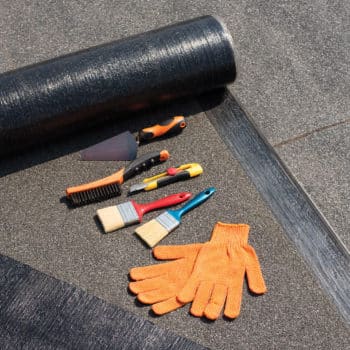
  • Your Roof – Your roof is an overlooked area that could help you save money on energy with the proper weatherization. You can easily transform your roof into a thermal heat deflecting surface with some DIY options. 
  • Your Gutters and Downspouts – Ineffective gutters and downspouts during heavy rain can cause water to run down next to your home’s foundation. Even if that water does not enter your basement, it can still erode soil from under the house footings, leading to cracked walls and ceilings. 

DIY Tips:

  • Weatherizing Your Basemen
  1. Waterproof your basement floors and walls. To start, remove paints, sealers, tile adhesive, efflorescence, and oils from the concrete. Then, use a shop-vac on the surface of the concrete to remove loose or crumbling concrete, mortar, dust, and dirt. Seal the concrete walls and floor against moisture with Radon Seal. Let the concrete dry out for a couple days, and then seal the other side.
  2. Add plastic film insulation to your basement windows. You can also use foam insulation spray to seal any air leaks around your basement windows.
  • Weatherizing Your Doors and Windows
  1. Apply weather-strips along the frame of your windows and doors.
  1. Install new sweeps to older door sweeps. Close the door, measure its length, and cut a new wood sweep to the proper size.
  1. Cut highly-sticky foam tape to size and secure it in exposed areas around your doors and windows.
  1. Hang thermal curtains on your windows. These will help block the sun’s rays during hot summer days and keep your home cool.
  • Weatherizing Your Attic or Crawlspace 
  1. Insulate your crawl space door and access panel with a 1-inch foil insulation board. Then, add market weather stripping at the door seams.
  1. Seal up air bypasses leading to your attic with caulk and fire-blocking expanding foam sealant. Then, cut and fit strips of 24-gauge sheet metal between the masonry chimney and surrounding wood frame. Seal the flashing where it meets the chimney with high-temperature caulk.
  1. Install weather-stripping around the perimeter of the access opening to your attic. Then, screw hooks to pull the hatch taught against the weather-stripping. Glue rigid extruded foam insulation to the top of the hatch.
  • Weatherizing Your Roof
  1. Apply cool roof coatings to your roof – If you have a low-sloped roof, apply cool roof coatings to single-ply membranes. If you have a steep-sloped roof, apply cool asphalt shingles. These provide better solar reflectance. If your roof has tile, apply cool roof coatings to make them more reflective and waterproof.
  • Weatherizing Your Gutter System
  1. If your gutters aren’t firmly connected to your house, add fascia hanger brackets to fasten your gutters to your home.
  1. If your gutters are leaking, make sure all clogs and debris are cleared, and then use a proper gutter seam sealer to prevent further leaking.
  1. If water is getting behind your gutters, you may need to install flashing behind your gutters. Consider using a gutter apron to prevent splashing and dripping behind your gutters.
  1. If your gutters are overflowing, you probably have an obstruction that needs to be unclogged. If removing the obstruction does not fix the issue, install splash guards on the outside edge of your gutter corners.
  1. Extend your downspouts. This process is simple: 1) Cut your downspout at a 45-degree angle with a hacksaw or metal shears. 2) Attach the zip hinge with 8 screws. 3) Spray paint the zip hinge to match your gutter color. 

Let the Pros Handle it

You now know some DIY projects to weatherize your home and save on energy this season. If you are looking for more ways to maximize the efficiency of your AC system, the experts at Morrow Mechanical are happy to help. For help with any of your HVAC needs, contact us today and allow our certified technicians to make your home spring-ready!

Tips to Increase the Lifespan of Your HVAC System

It is too easy to take for granted the things we rely on for daily comfort. Your HVAC system is one of the key components to keeping your home comfortable and safe through each season. So, do you take care of your HVAC system as well as it takes care of you? If not, you can start now! The experts at Morrow Mechanical are here to share with you our tips to increase the lifespan of your HVAC system.

Change Your Air Filters 

We recommend that you change your air filters every 4-6 weeks for the best air quality. If you have a reusable air filter, such as an electrostatic filter, you should clean it once a month.

Avoid Closing Interior Doors and Blocking Air Vents 

Keeping interior doors open as much as possible will improve air circulation throughout your home and allow your HVAC system to work effortlessly. Always keep your vents clear and free of obstructions to help your HVAC system induce air properly and freely.

Inspect and Clean Your Condenser Regularly 

Somewhere along the outside of your home is your AC condenser. Regularly inspect your condenser for signs of elemental damage, and clear away any debris such as leaves or weeds that may accumulate on or around the unit. Cut away vegetation that is growing around your condenser to help keep it free of obstructions.

Use the “Auto” Fan Setting 

Your HVAC system most likely has 2 fan settings: “auto” and “on.” While the “on” setting instructs the fan to run constantly, the “auto” fan setting instructs the fan to run only when the system is actively heating or cooling. Although the “on” setting can help improve the air quality in your home by trapping more dust, it forces your HVAC system to work much harder, shaving more time off its life.

Regularly Inspect Your Outdoor Drainage Pipe –

Your HVAC unit has a PVC pipe that leads outside and serves as a drainage outlet. To avoid expensive repairs to this outlet you can regularly inspect the drainage pipe for any blockages or debris. This is especially important during winter months in case of ice or snow deposits.

Upgrade Your Insulation –

This is a wise investment and sure-fire way to help increase the lifespan of your HVAC system. Insulation lessens the struggle to keep your treated air inside your home. Your attic is one of the most important places you should check for adequate insulation. If you think you need to step up your insulation game throughout your home, the best way to locate your weakly insulated spots is to schedule a professional energy audit.

Install a Smart Thermostat –

Smart thermostats are one of the greatest technological investments you can make for your HVAC system. They are easy to program and allow you to control your thermostat settings from anywhere using your smartphone or tablet. Some models can even make energy-saving adjustments to your settings for you by simply learning your HVAC habits.

Use Ceiling Fans During Hot Weather Months –

You can give your system a break by using your ceiling fans during hot weather months and pushing your AC temperature a bit higher.

Invest in Reflective Shades –

Reflective shades work well to block out unwanted heat from the sun during hot weather months. This can also allow you to give your AC system a break without losing cool air in your home.

Keep Shades Open During Cool Weather Months –

Let free heat from the sun pour into your home so you can set your thermostat a bit lower.

Schedule a Professional Load Calculation –

If your HVAC system is too small, it will not be able to maintain a comfortable temperature setting and will run constantly as it tries to heat or cool your home. Conversely, a system that is too big for your home will reach the desired temperature setting too fast, making the system turn on and off constantly. This can result in moisture issues and additional wear on your HVAC system.

Schedule Annual Checkups –

Just like your car, your HVAC system requires routine maintenance to continue running efficiently. Your AC and furnace should be inspected, cleaned, and tuned up every year by a professional. We recommend 2 annual checkups:

  • Your AC Service – should be scheduled in the spring
  • Your Furnace Service – should be scheduled in late summer or early fall.

Pro Tip: Scheduling these checkups ahead of the changing season will allow you to make sure your system is optimized for efficiency the first day you need it. If a serious problem is detected during one of these checkups, you can address it before you need to switch systems.

Now that you know our tips to increase the lifespan of your HVAC system, you can prepare your system for anything. Start this season off right – contact the pros at Morrow Mechanical and allow us to whip your HVAC system into fighting shape for the Spring and Summer season!

Get Organized in 2019: Tips for Planning Ahead

We are all familiar with that list of resolutions we make at the start of the new year. Whether these goals are focused on your health, career, personal life or home, reaching them begins with changing your daily organizational habits. For some great ideas to revamp your habits and reach your 2019 resolutions, try following some of these tips from the insightful experts at Morrow Mechanical.

Tidying Tips for Your Home & Office

Clutter in your home or workspace will only lead to clutter in your mind. Developing organizational habits in your daily routine starts with organizing your space. Here are some tips to get you started.

1.      Organize your Tidying Time by item, not location

Old Ben Franklin said it best: “A place for everything, everything in its place.” This means keeping all of one item in the same location, so you do not find yourself repeating the same tidying work multiple times. This will reduce the daily amount of time spent tidying or trying to find misplaced items and leave you with more time to devote to your 2019 goals.

2.      Make Daily Time for Tidying

Adopt the habit of tidying your space before leaving it. Aim for leaving a space as tidy or tidier than how you found it, and you will be able to avoid stress-inducing clutter in your daily life.

3.      Returning Items to their Home

Make sure each of your items has a place, so you can more easily develop the habit of returning them when you are finished using them. Knowing everything is in its own place will help you feel at peace and comfortable in your home or in your workspace.

Organizational Tools & Apps for 2019

Now that you have learned some ways to declutter your home and workspace and keep it that way, you are ready to add some of these organizational tools and apps to make 2019 your year:

1.      The Things 3 App for iOS

Find yourself buying a new planner and calendar each year that just ends up collecting dust in a drawer? Invest your money in the iOS app called Things 3. This app includes an interactive checklist and a clean and easy-to-use design.

2.      The ZenDay App for iOS & Android

Approach your daily to-dos with a bird’s-eye view. ZenDay helps you zero in on your first task while seeing what you need to focus on next. This app helps you prioritize your list of to-dos and maintain perspective on your progress by color-coding overdue tasks and upcoming deadlines. If you missed something on your list, ZenDay will automatically reschedule those missed tasks.

*Pro Tip: Utilize the debriefing feature of this app to get an overview of your productivity level!

3.      Google Calendar for iOS & Android

Stay on top of events and deadlines with the Google Calendar app. With this app, you can set reminders for future commitments, and look up previous and future events with the search option. Gmail users will find events mentioned in their emails (such as hotel or flight reservations) automatically imported into their Google Calendar.

4.      do App for iOS & Android

This app is a to-do list and calendar in one and is ideal for organizing a large range of tasks into one location. Any.do is great for viewing your month at a glance and a day-to-day list of to-dos by offering a dual view of your monthly calendar at the top, and a scrolling list of to-dos, events and overdue tasks below.

*Bonus: This app is also compatible with your Google, iCloud and Outlook calendars!

Stay on Top of Household Maintenance

Do not let all the hard work you are putting in toward developing tidier habits go to waste by putting your household maintenance on the backburner. Here are some regular DIY maintenance tasks you should add to your 2019 to-do list:

  1. Inspect and change out your HVAC filters. For smaller families without pets or allergies, change your filters every 2-3 months.
  • Clean your kitchen sink disposal; put some vinegar in an ice tray, let it freeze, then run the cubes through the disposal. This will freshen your disposal and sharpen the blades!
  • Test your smoke/carbon dioxide detectors. Press the “test” button on your detectors; if the alarm sounds, you are in good shape, but if not, replace the batteries immediately and try again. If that still does not fix it and you’ve cleaned the battery terminal, you need a new detector.
  • Test your water heater’s pressure relief valve; this will keep your pipes from leaking due to a buildup of mineral and corrosion.
  • Vacuum your refrigerator coils. Save up to $100 annually by keeping the coils clean on your refrigerator so it does not use up more energy to keep running.
  • Now you have learned some tips on getting organized for 2019 that will benefit you in many different aspects of your life. Implementing the tidying tips and organizational app tools will not only help you focus more of your time and energy on the important goals you have set for yourself but will allow you to start 2019 off with a more peaceful frame of mind.

    For more peace of mind about your household maintenance, contact the experts at Morrow Mechanical and get ahead of future repairs.

    How to Save Money on Heating Expenses

    Even though the coldest parts of the winter season here in the Houston area are more than likely done, we’re not out of the woods quite yet. There are still days that get pretty chilly, and on those days you might be tempted to crank the heat up. Doing so, however, means you’ll have to pay for the heat on the back end with some irritatingly high energy bills.

    You can sidestep this issue, though, by taking a few steps at home to create heat through other means. Follow these simple tips from the experts at Morrow Mechanical, and you’ll be cozy and comfortable on those winter doldrums.

    Seal Entry Points in Your Home

    One of the ways that we end up paying more for energy bills than we intended to is from losing the heat we’ve already incorporated in our homes! If your doors, windows and other entry points to your home aren’t properly sealed, then you’ll lose a significant amount of heat to the outdoors. Get some weather stripping and place it underneath your door, or perform a quick caulking job to reseal any openings, and you can save anywhere from 5-20% on your heating bills!

    Lower the Water Heater Temperature

    One of the things that comforts us the most during a cold spell is jumping in a searing-hot shower. But if you adjust the temperature of your water heater just a bit, you can end up with substantial savings. Most water heaters are set by default at roughly 140 degrees Fahrenheit – but lowering the temperature by just 10 degrees can make a huge difference!

    According to the National Energy Foundation, a 10-degree change can save you anywhere from 3-5% on your energy bills – a small percentage that will add up throughout the year!

    Purchase Rugs to Insulate Floor

    If you had to list the places in your home that suffer the most from heat loss, where would your floor rank? It probably wouldn’t be too high, but it should be. Thanks to our friends from the NEF, we know that you can lose roughly 10% of your home’s energy through the floor if it’s not insulated! Cover your floor with area rugs to prevent that much-needed warmth from escaping.

    Layer Up!

    This is the simplest way to save money. Although we can’t reasonably expect anyone to turn their thermostat down to 50 degrees – we certainly couldn’t – a more manageable temperature is doable if you compensate in other ways.

    If you can handle it, keep your thermostat at around 70 degrees during the colder days, and add a few layers to your wardrobe. A nice sweater and some wool socks and slippers will help balance out the chillier temperatures, and they don’t cost a thing to wear!

    When you’re looking for a company to help keep you warm when it’s cold, don’t look any further than Morrow Mechanical. Give us a call at 281-370-1566 for the reliable, friendly heating service you can count on!

    Schedule Service

    "*" indicates required fields

    This field is for validation purposes and should be left unchanged.